History
The Bengal cat is one of the most fascinating examples of how the wild and domestic worlds can come together in harmony. Its story begins in the mid-20th century, when breeders first attempted to combine the exotic beauty of the Asian Leopard Cat, a small wild feline native to the forests of Asia, with the affectionate temperament of the domestic cat. The most influential figure in this process was Jean Mill, an American breeder and conservationist who believed that creating such a hybrid could help spark appreciation for wild cats while offering families a companion with the same striking looks.
The earliest generations of Bengals, known as F1, F2, and F3, were direct descendants of wild cats and often retained much of their cautious, untamed nature. They were captivating to look at but not yet fully suited to life as household pets. Over time, breeders carefully selected individuals who combined the bold, exotic patterns of their wild ancestors with the gentleness and adaptability of domestic breeds. This process was slow and deliberate, but it ultimately shaped the Bengal into the cat we know today: a striking animal with leopard-like rosettes, marbling, or spotted patterns, yet with the affectionate and playful disposition of a true companion.
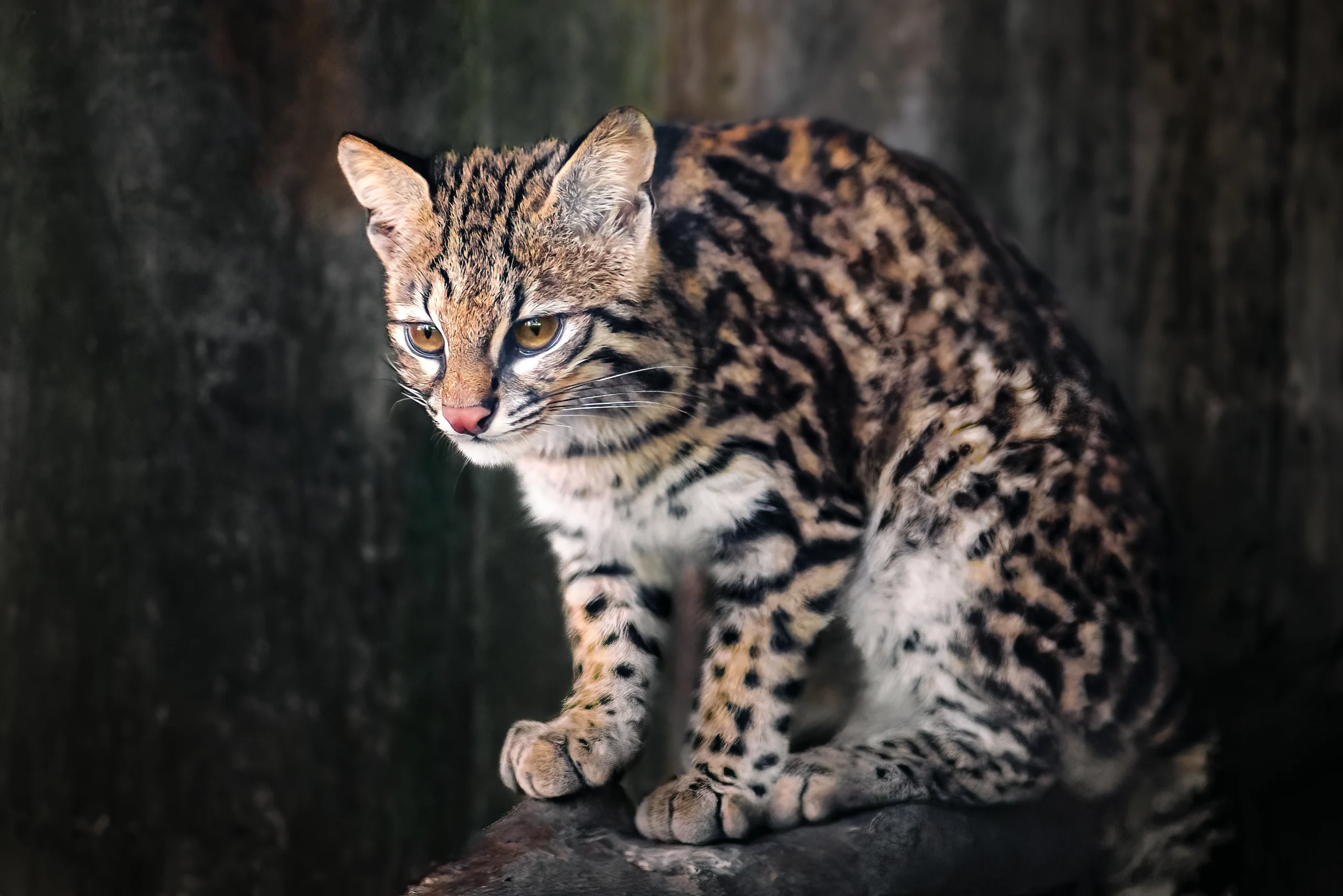
Asian Leopard Cat
By the 1980s, Bengals had reached a stage of development where they were recognized as a distinct breed, and their popularity quickly spread. In 1983, the International Cat Association officially accepted Bengals, allowing them to compete in shows, and from there the breed’s reputation grew worldwide. They became admired not only for their rare appearance but also for their athleticism, intelligence, and personality. Unlike other spotted cats, Bengals stood out for their shimmering coats, often described as “glittered,” which catch the light like fine silk.
Today, the Bengal is regarded as one of the most remarkable domestic cat breeds, a living link between the wilderness and the home. Their history reflects both human creativity and a deep respect for the natural world, capturing the essence of the jungle while bringing it safely and lovingly into family life.
Personality & Traits
The Bengal cat is a breed full of contrasts: wild in appearance yet deeply affectionate in nature. Their personality is defined by an endless supply of energy and curiosity. Unlike many other domestic cats, Bengals are always on the move, exploring every corner of their environment, climbing to the highest spots in the house, or dashing across the room in playful bursts of speed. They are athletic, agile, and strong, with a natural grace that reveals their wild ancestry.
Their intelligence is immediately noticeable. Bengals are quick learners, able to figure out puzzles, open cupboards, or invent new ways to entertain themselves if their environment doesn’t challenge them enough. Because of this, they thrive in homes where they are given stimulation — whether it is through interactive toys, training, or even learning tricks such as fetching or walking on a leash. This clever and curious streak makes them both fascinating companions and, at times, mischievous adventurers.
Another distinctive trait of Bengals is their unusual fascination with water. Many are known to dip their paws in water bowls, play in sinks, or even join their humans in the shower. This trait sets them apart from most domestic cats and adds another layer to their wild yet playful character.
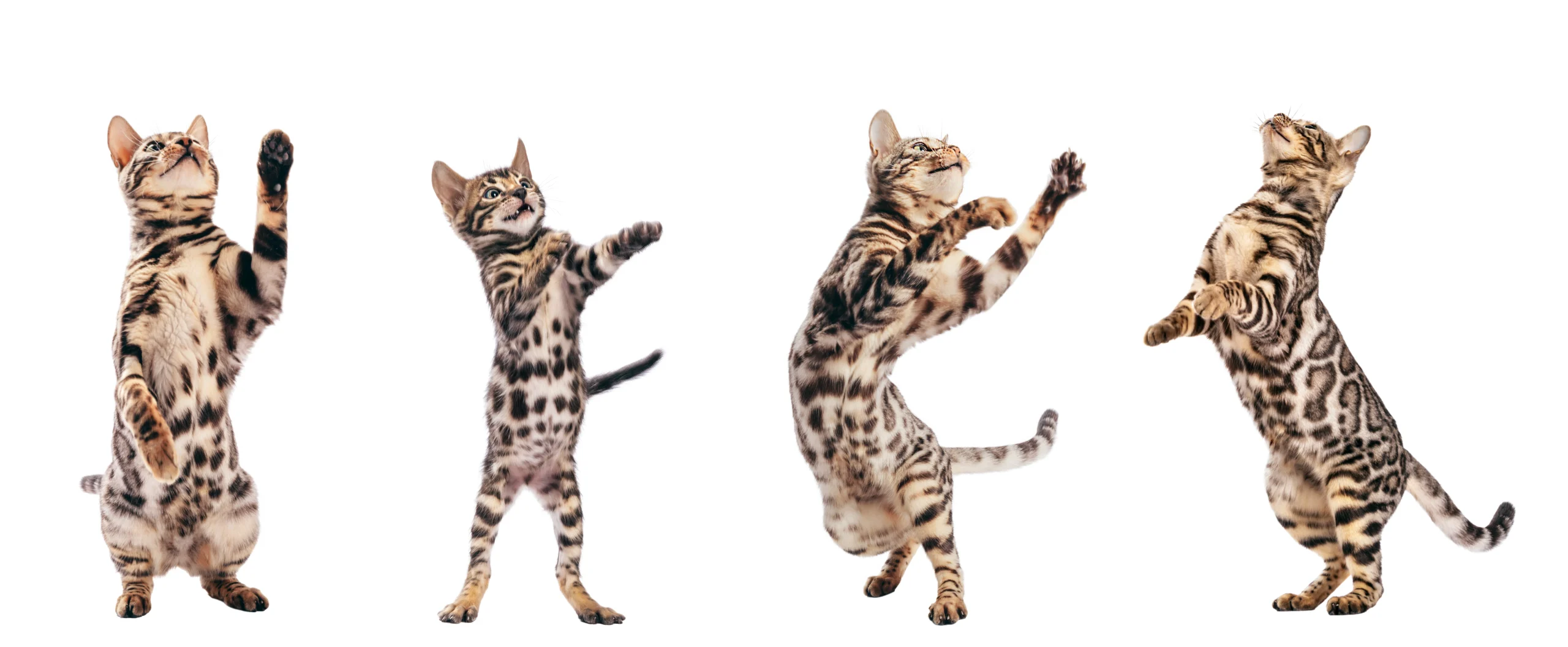
Social by nature, Bengals form strong bonds with their families. They are not always the kind of cats that will spend hours quietly on a lap, but they show their affection in more active ways: following their humans around the house, greeting them at the door, or lying beside them during rest. They crave attention and companionship, and they often enjoy the company of other pets if introduced properly.
Bengals are also very vocal and expressive. They communicate through a wide range of sounds, from soft chirps and trills to insistent meows, and they often use their voice to interact with people or to demand attention. Combined with their body language and intense gaze, this makes them one of the most communicative breeds.
At their core, Bengals are affectionate, loyal, and deeply engaging cats. They are best suited to households that can provide them with plenty of stimulation, interaction, and love. In return, they reward their families with unmatched beauty, playfulness, and companionship.
Coat Colors
The Bengal cat is celebrated for the extraordinary variety of its coat colors, each one adding a different dimension to the breed’s wild and luxurious appearance. The most common and perhaps the most iconic are the brown Bengals, whose shades range from rich golden tones to cooler, deeper tans. Within this group there are warm browns that glow with a fiery, almost reddish hue, golden browns that shimmer like sunlight, and cooler browns that offer a softer, more muted elegance. Each variation highlights the spots or rosettes in a unique way, creating a spectrum of beauty even within a single color category.
Another striking group are the snows, which bring a pale, icy elegance to the breed. These include the Seal Lynx Point Bengals, with their brilliant blue eyes and frosted coats, the Mink Bengals with a creamy blend of tones and their signature aqua eyes, and the Sepia Bengals with their richer ivory shades and deep golden or green eyes. Snows often carry the same dramatic markings as browns, but the contrast against the light background gives them an entirely different, more ethereal character.
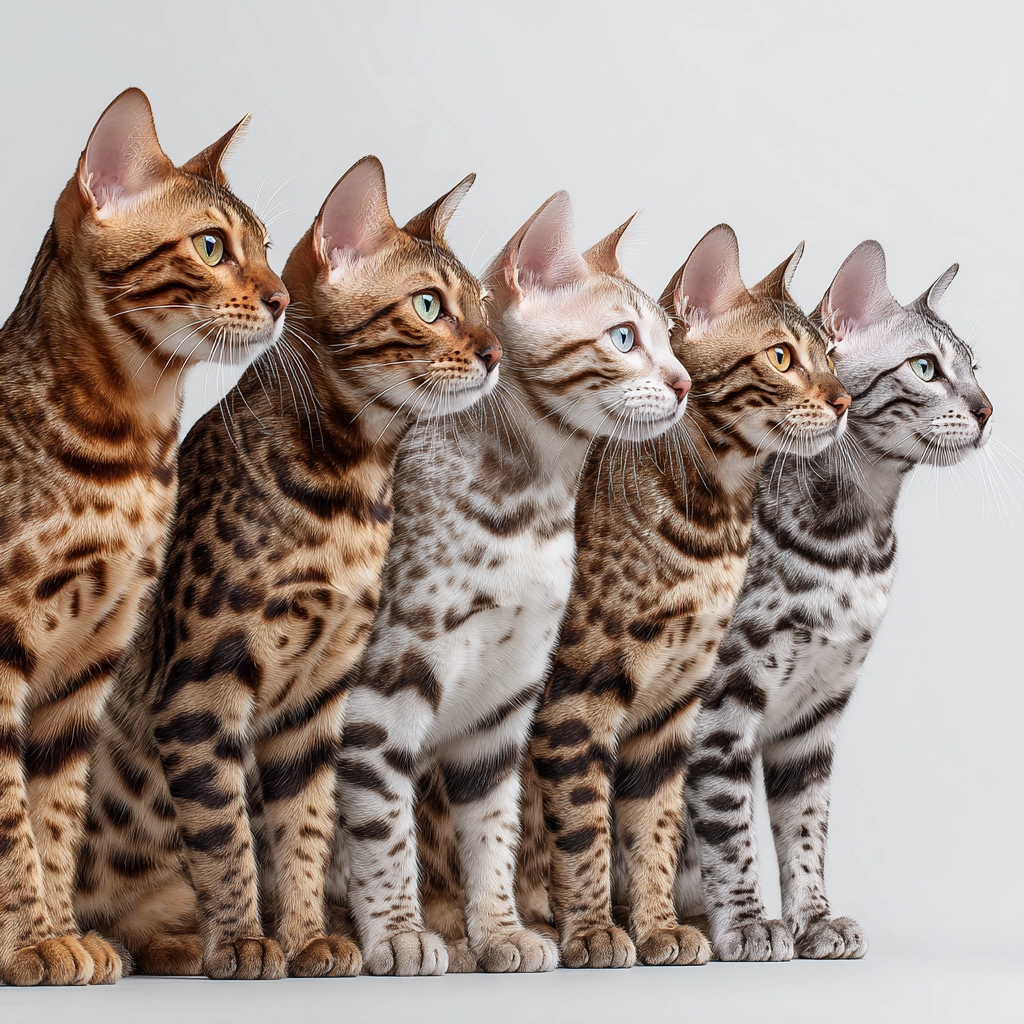
Silvers add yet another level of sophistication, stripping away the warmth of other colors and replacing it with a cool, metallic sheen. A well-bred silver Bengal gleams with sharp contrast between dark markings and a nearly white background, often appearing as though the cat has stepped straight out of a monochrome jungle.
Among the most mysterious are the charcoals, marked by their distinctive “Zorro mask” across the face and a darker cape along the back. This trait can appear over browns, snows, or silvers, giving each base color a more dramatic and wild edge. Even more enigmatic are the melanistic Bengals, sometimes referred to as black or smoke, whose ghost rosettes can only be seen when light strikes them at certain angles, revealing the hidden jungle beneath their dark coats.
Beyond these established varieties, there are also rare and experimental colors that continue to fascinate breeders and enthusiasts alike. Chocolate, cinnamon, lilac, fawn, cream, and even red have appeared in small numbers, hinting at the endless possibilities locked within Bengal genetics. While not yet widely recognized, they represent the ongoing evolution of the breed and the creativity of those dedicated to expanding its palette.
Together, this dazzling array of colors ensures that no two Bengals are ever truly the same. Each coat tells its own story, whether glowing with warmth, shimmering with silver, or hiding wild patterns in the shadows. It is this diversity that makes the Bengal one of the most visually captivating breeds in the world.
Coat Patterns
What makes the Bengal so instantly recognizable is not only its colors but also the extraordinary variety of patterns that decorate its coat. These markings, inspired by some of the most beautiful wildcats in nature, give each Bengal a unique identity and an unmistakable presence. Among the most famous are the spotted and rosetted Bengals, which carry markings reminiscent of leopards and jaguars. Some have simple, small spots scattered across their bodies, while others display arrowhead shapes pointing gracefully toward the tail, or paw-print clusters that resemble the impression of a wild animal’s step. The most sought-after are the rosettes, where a darker outline surrounds a lighter center, forming donut shapes, chains, or even clouded patterns that evoke the mysterious beauty of the clouded leopard.
Not all Bengals are spotted. Another striking expression of the breed is the marbled pattern, where broad swirls flow across the coat like currents in water or the veins of polished stone. Unlike the traditional blotched tabby, the Bengal marble is elongated and horizontal, giving the impression of motion even when the cat is still. Some marbled Bengals have high contrast, with bold, chaotic streaks, while others carry softer, sheeted patterns that seem to melt into their background. The marbled Bengal is a living canvas, a moving piece of abstract art.
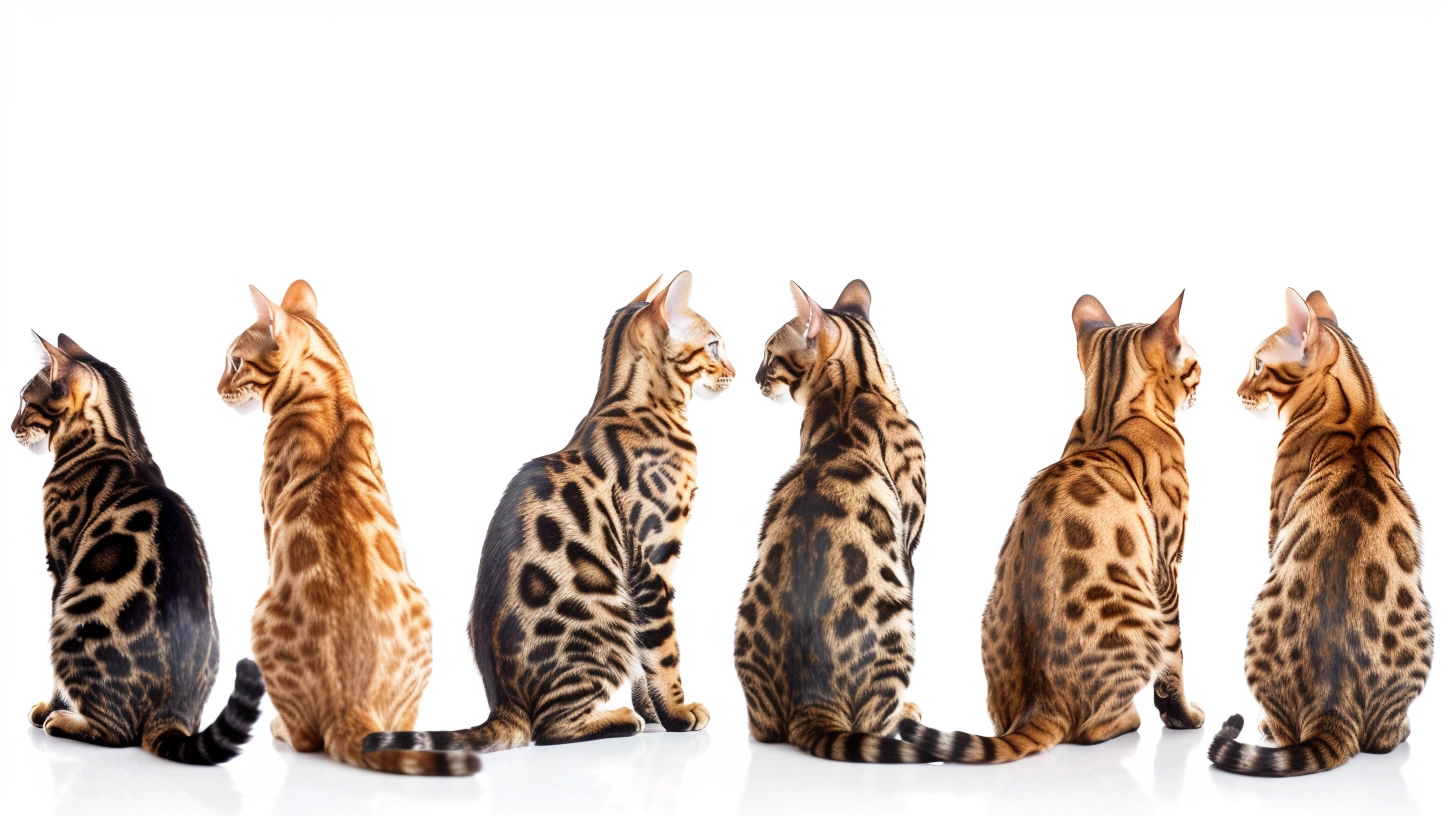
There are also hybrids of these expressions, known as sparbled Bengals, where marbled and spotted traits combine to create something entirely unexpected and unique. In addition, the rare longhaired variety, often referred to as the Cashmere Bengal, presents either spotted or marbled patterns over a silky, flowing coat, adding yet another layer of diversity to the breed.
This remarkable range of patterns ensures that the Bengal can resemble different wild ancestors: the leopard, the jaguar, the ocelot, or the clouded leopard. Each variation captures a different essence of the jungle, but all share the same power to captivate. It is the unpredictability and individuality of these patterns that make Bengal cats truly living works of art.
Genetics & Eye Colors
Behind the Bengal’s dazzling variety of coats lies a fascinating story of genetics. Each shade, each rosette, and each shimmer is written in the cat’s DNA, a living testament to how complex and beautiful inheritance can be. The base color of most Bengals is rooted in the classic brown or black gene, which provides the foundation for the golden and tan tones most people associate with the breed. From there, dilution genes soften those colors into blues, lilacs, creams, or fawns, expanding the palette far beyond the wildcat’s natural range.
The snow Bengals, beloved for their pale elegance, are the result of specific genetic combinations inherited from Siamese and Burmese ancestry. Seal Lynx Point Bengals, carrying the cs gene on both sides, are born almost white and develop faint markings as they mature, accompanied by their signature brilliant blue eyes. Mink Bengals, with a mix of cs and cb, inherit a creamy coat with a unique aqua eye color that seems to shimmer between blue and green. Sepia Bengals, carrying two copies of cb, display richer ivory shades with markings in high contrast and eyes that glow in tones of gold or green.
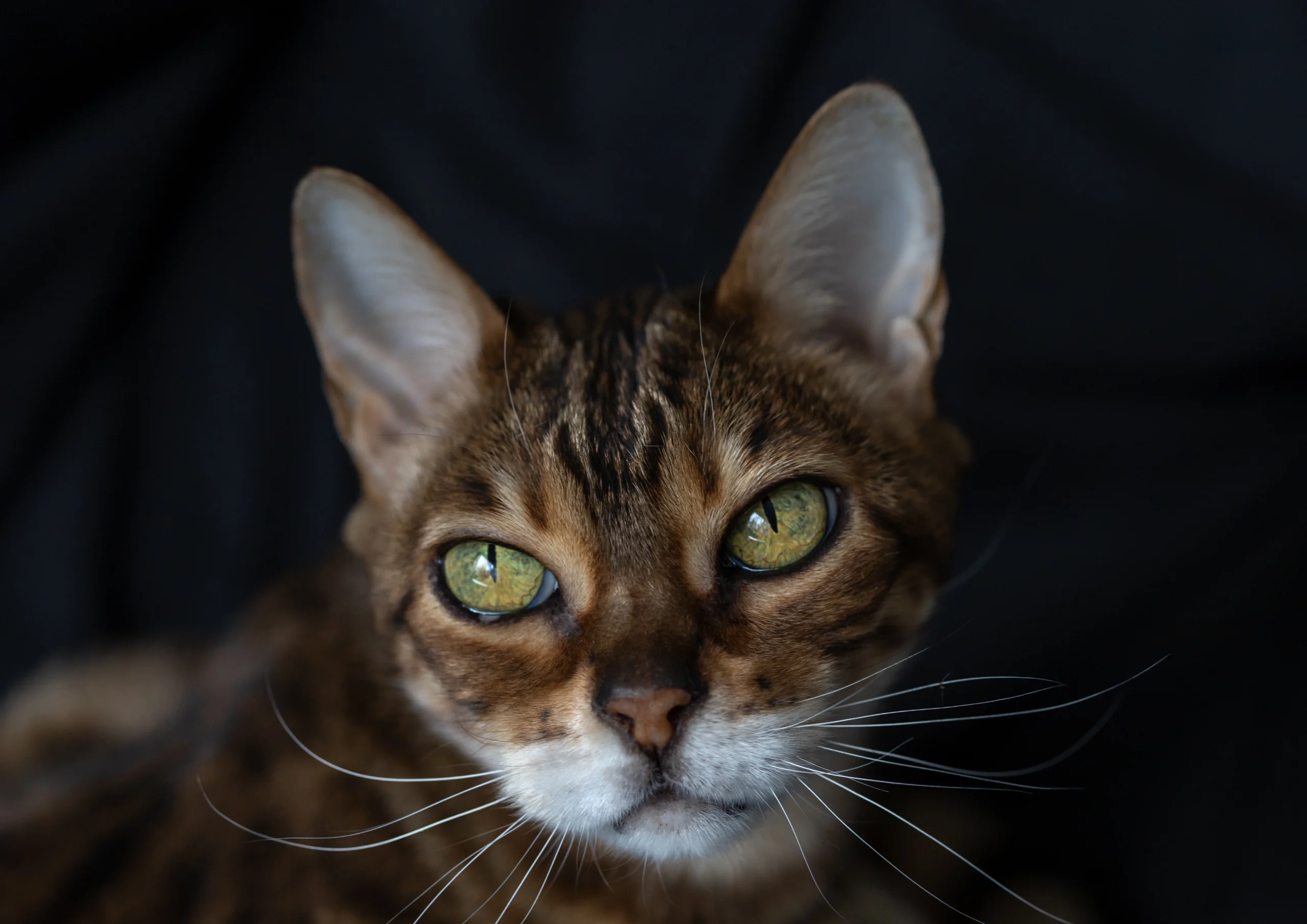
Another layer of genetic magic comes from the Apb gene, responsible for the charcoal Bengal. These cats carry the dramatic “Zorro mask” across the face and a cape of darker shading along the back, traits that can appear over any base color, giving them a more mysterious and wild look. The silver Bengal owes its frosted background to the inhibitor gene, which strips away warm pigments, leaving behind a striking, almost metallic coat that heightens contrast and draws attention to every spot or swirl.
Even the eyes tell a genetic story. While many Bengals have green, gold, or hazel eyes, their shades shift depending on the underlying coat genetics. Lynx Bengals almost always shine with ice-blue eyes, Mink Bengals carry the rare aqua tone, and Sepias reveal themselves with the deep gold and green that echo their warm coats. The eyes of a Bengal are not just windows to their personality; they are also clues to the lineage written into their bloodline.
This interplay of genes, from the ones that dictate color to those that define pattern, ensures that Bengals are endlessly diverse. No two cats look exactly the same, and each is a small genetic masterpiece, carrying the whispers of both their wild ancestors and their carefully bred domestic heritage.
Wild Inspirations
The Bengal cat owes much of its beauty to the wild creatures that inspired its creation. From the very beginning, breeders looked to nature’s most striking felines for guidance, and this is why every Bengal seems to carry echoes of the jungle in its coat. The leopard, with its bold rosettes scattered across golden fur, provided the most immediate model. When you see a Bengal stretching in the sun, the resemblance to this majestic predator is undeniable. Yet the breed’s diversity allows it to channel many other wildcats as well.
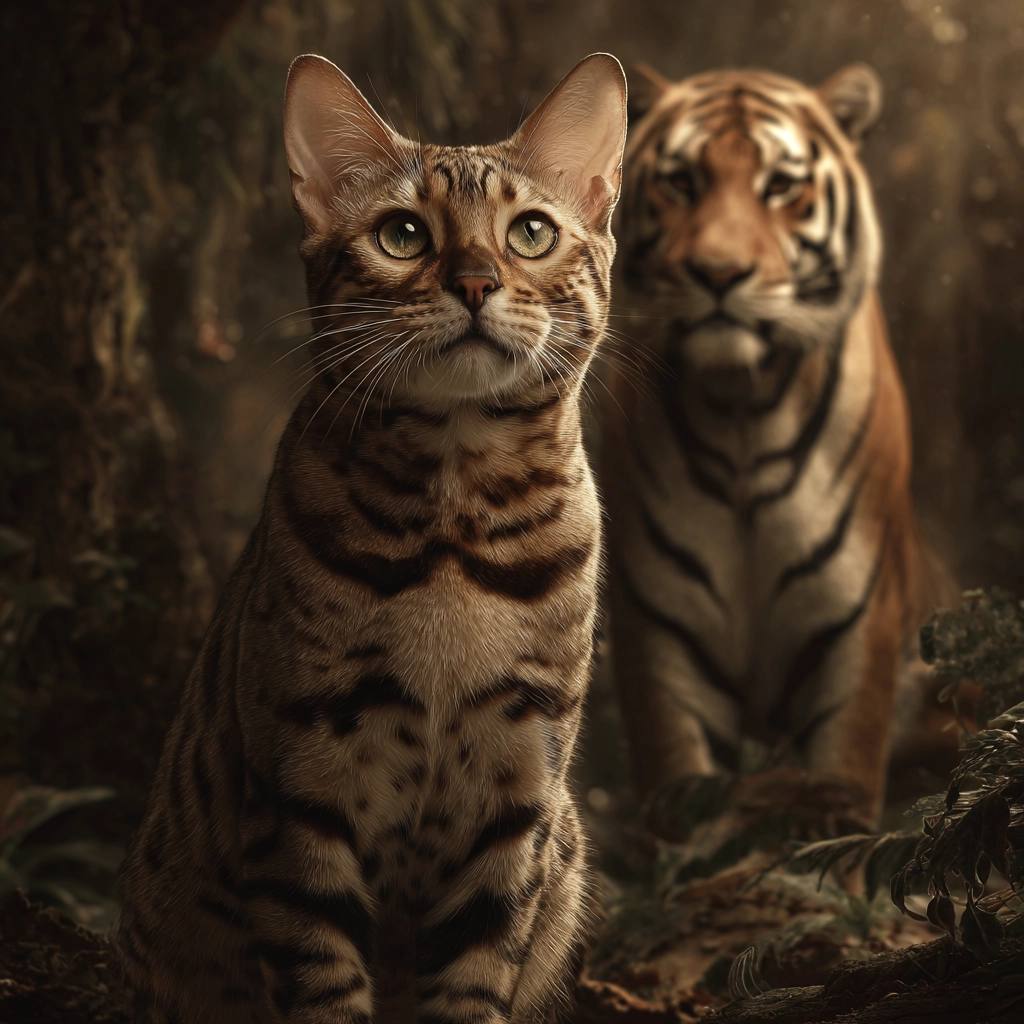
The jaguar, with its dramatic donut-shaped rosettes, is reflected in Bengals whose markings form large, closed circles with lighter centers. The ocelot, known for its chain-like rosettes and flowing patterns, finds a domestic counterpart in Bengals with linked spots running down their sides in graceful lines. The margay, smaller but no less beautiful, left its mark in Bengals with irregular clusters of spots, giving them an unpredictable and natural look. Most captivating of all is the clouded leopard, with its large, cloud-like markings that seem painted by hand — a direct inspiration for the “clouded” Bengal pattern, which brings a touch of mystery and rarity to the breed.
These wild ancestors are not just physical inspirations; they symbolize what makes the Bengal so special. It is a domestic cat that carries within it the spirit of the wild, a reminder of forests and jungles far away, and yet it lives harmoniously in our homes. To look at a Bengal is to see both the artistry of nature and the vision of breeders who sought to capture that beauty without taking it away from its source.
Care & Health
Owning a Bengal cat is a commitment not only to its beauty and playful nature but also to its well-being. Bengals are strong, muscular, and athletic animals that require plenty of space and stimulation to thrive. Unlike more sedentary breeds, they do not enjoy a quiet life spent entirely on the sofa. They need opportunities to climb, jump, and explore, which means cat trees, wall shelves, or dedicated play areas are almost a necessity in the Bengal home. Without such outlets for their energy, they can become restless and mischievous, often inventing their own games that may involve opening cupboards or leaping onto high surfaces.
Their health is generally robust, but as with any pedigreed breed, responsible breeders test for certain hereditary conditions. Two of the most important are hypertrophic cardiomyopathy (HCM), a heart condition that can occur in many cats, and progressive retinal atrophy (PRA-b), a genetic eye disease. Regular health screenings and choosing kittens from catteries that prioritize testing significantly reduce these risks and ensure a healthy start in life. Bengals also benefit from routine veterinary care, vaccinations, and parasite prevention, just like any other domestic cat.
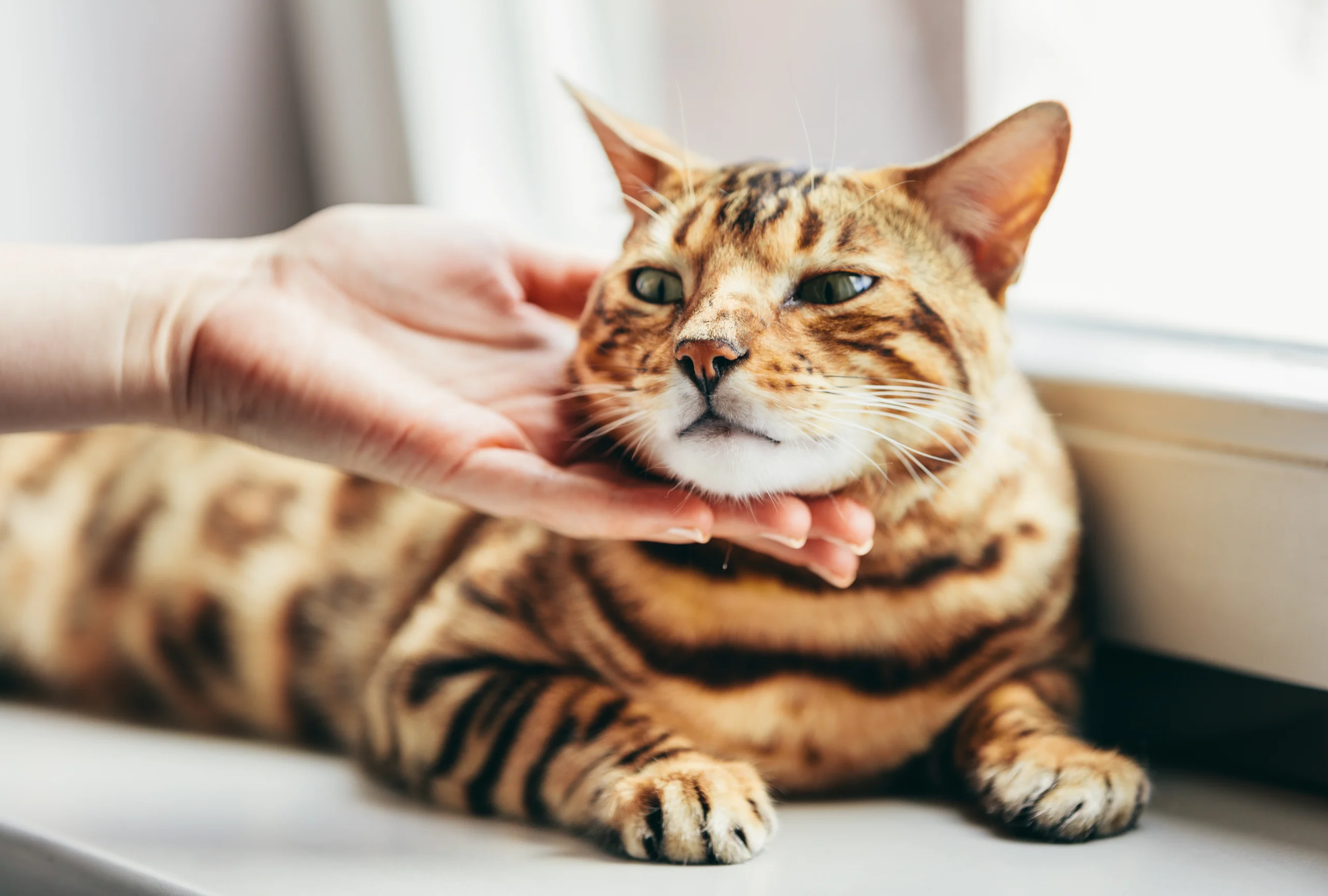
When it comes to grooming, Bengals are refreshingly low-maintenance. Their short, sleek coats rarely mat and require little more than an occasional brushing to keep them glossy and free of loose hairs. The exception is the Cashmere Bengal, whose longer coat benefits from more regular grooming, but even then it is far easier to manage than many longhaired breeds. More important than grooming is the enrichment of their minds and bodies: interactive toys, puzzle feeders, and daily play sessions not only keep them physically fit but also nurture their sharp intelligence.
Perhaps the most important element of Bengal care is time and companionship. These are not cats that thrive in isolation. They form strong bonds with their humans, and when left alone for long periods, they can become lonely and frustrated. For this reason, many Bengal owners find that their cats enjoy having another pet companion, whether another Bengal, a domestic cat, or even a dog that shares their energy.
Caring for a Bengal is about more than feeding and brushing. It is about providing a life full of stimulation, affection, and interaction. When their needs are met, Bengals reward their families with boundless affection, playful loyalty, and the incomparable experience of sharing daily life with a creature that carries the elegance of the wild within the safety of the home.